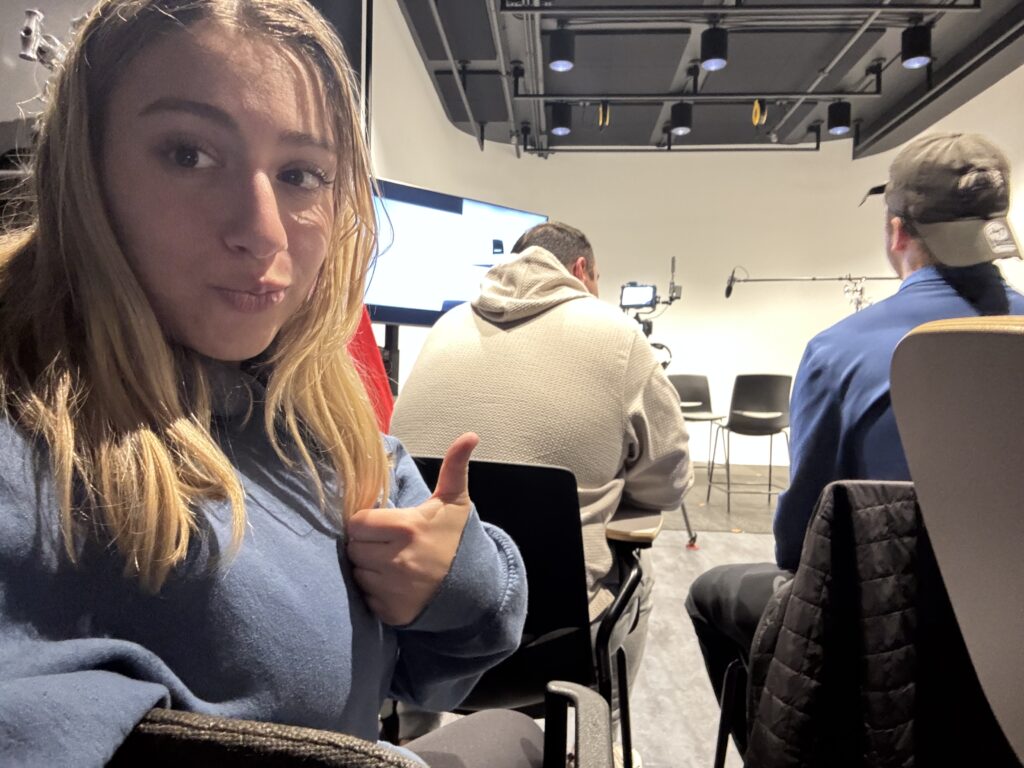
I learned a lot from this experience using new technology than was unfamiliar to me. At first, I struggled, and I know that I should’ve watched tutorials on how to do it rather than just giving up. That is the first big lesson I learned. Regarding the technology, it got easier after playing around with it. The transitions are pretty choppy but I definitely think I can clean that up for next time. It makes a lot more sense now, and I think I’m pretty confident on recording, editing (fading, amplifying) along with adding the music.
On Monday, October 5th, I went to a viewing of a movie called “2040” by the environmental classes. The movie was about climate change and other issues in today’s society, and it brought up multiple solutions on how we can fix up our world. After the film, there was a discussion panel section, where we were able to talk through some of the solutions and/or what we found interesting during the movie. I learned a lot about how I can even be a huge part in reducing climate change and restoring the world.
The main solution they brought up was about educating women in girls in society because providing them with job opportunities and a good education. This will give them a better quality of life and have such a huge impact on our environment, society, and economy. It’s also a win/win because as we are fighting climate change, we are also educating women and girls.
I’ll mention a few other solutions they provided. First ride sharing and electric cars. Rideshare would take a ton of cars off the roads and therefore reduce emissions. There will be more parking spots available. With electric cars, obviously, they don’t have emissions so this is a key shift we are moving towards. Second there is regenerative farming, which is what we need to shift back to. This is when the plants absorb the CO2 from the atmosphere and they use it to make simple sugars which is their food. The rest they store in the soil, which enriches it first of all, and second of all it takes CO2 from the atmosphere. The third solution I want to talk about is the use of seaweed and how key it is. Seaweed absorbs a ton of CO2 from the atmosphere which is great for restoring the alkaline imbalance which has been destroying marine ecosystems.
*no picture taken*
1. Connection to learning outcomes:
After reading through the learning outcomes of my major I see feel it’s more vocational focused, rather than an enriched. For example, learning outcome number two describes “Demonstrate written communication skills expected of a future professional in the field: and then bullets include – write for specific purposes and situations, and write informatively, persuasively and clearly. Where does this tie into any of Boyer’s three enriched major questions. I don’t see it giving any indications of the history, I cannot see where ethical or moral issues apply, and I cannot make social/economic connections. Although this is okay, because I don’t believe the three questions have to be used in every aspect. This baseline, technical knowledge is very important as well – and then you can build on this. A lot of these learning outcomes, at first glance, portray this sort of vocational feel. This is where we have to expand into looking at course descriptions ect.
2. Connections to a course description:
The course, “Social Media: Theory and Practice”, even though it isn’t a required course of the major, I feel that is a very good class to take, that encompasses some very enriched ideas. The course description “This course explores the role of media and mediated communication in shaping human interaction and society. Students will engage with social media and mediated communities in a variety of contexts in the process of reflecting on and critiquing the effect of communication technology on everyday life. The course will evaluate a variety of current events and topics of debate in media culture shaped by social, mobile, and digital communication technology.” Being able to take skills learned in communications (such as the media) and apply it to everyday life. Exploring the role of the media and mediated communication in shaping human interaction and society can be used in a variety of ways to solve social issues ect. A variety of current events will be explored which provides a broad understanding and requires skills that are learned in an enriched major. A vocational major will not provide you with the skills necessary to think critically, analyze, or connect anything. What this major does really well is give students the skills necessary to “lift up a job and give it meaning” (Boyer 22). It provides a broad range of opportunities that aren’t as available in a narrowly focused, specialized education.
© 2026 Madi's ePortfolio
Theme by Anders Noren — Up ↑
